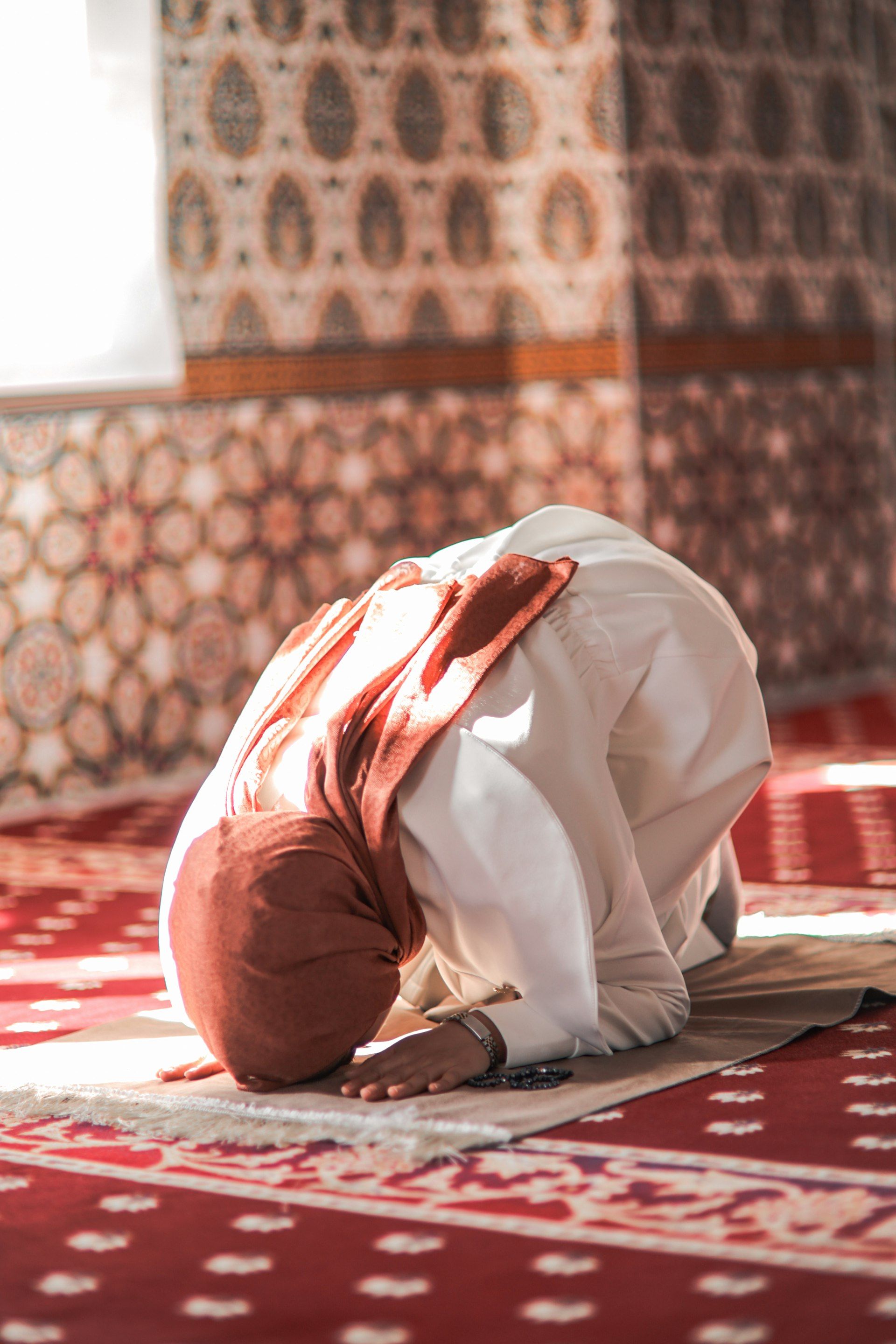
For women
Umrah for women: travelling without a mahram.
The new Saudi rules, what's needed, group dynamics, safety considerations, ihram for women, and the option of female only journeys. A reverent guide for women travelling for Umrah.
4 April 2026 · 11 min read
In short
Saudi Arabia removed the mahram requirement for women's Umrah in 2021. Women aged eighteen and above may travel for Umrah without a male guardian, as part of an organised group. The visa, the rites, and the experience itself are the same as for men, with thoughtful adjustments. Female only journeys with female guides are available.
Takeaways
- Saudi Arabia permits women aged eighteen and above to perform Umrah without a mahram, as part of an organised group.
- Ihram for women is regular modest clothing, head covered, no face veil during ihram, no gloves.
- Female only journeys with female guides are available on request.
- Menstruation prevents Tawaf temporarily; women plan around their cycle where possible, or wait.
The Umrah was, until 2021, a journey that required a male guardian for women under forty five travelling alone. The rule shaped how generations of women travelled. For many it was a comfort; for many it was an obstacle. The decision to lift the requirement was significant, and the journeys that have happened since have been quietly shaped by it.
This is a reverent guide for women considering Umrah, walked through with the practical and the spiritual kept side by side.
What changed in 2021
In June 2021, the Saudi Ministry of Hajj and Umrah issued a public clarification: women aged eighteen and above may register for Umrah without a male guardian, on the condition that they travel as part of an organised group. The change followed a series of relaxations that began in 2019 with the introduction of the Saudi tourist visa, which had already opened the door to independent women’s travel for tourism.
The conditions, as currently applied:
- Age: Eighteen and above.
- Visa: The standard Umrah visa or the Saudi tourist eVisa, processed normally.
- Group: Travel as part of a recognised Umrah package or organised group.
- Additional documentation: No special letter or permission is required.
For more on the visa routes, see Saudi visa rules by passport: a 2026 guide.
The Islamic ruling
Scholarly opinions on women travelling for Hajj or Umrah without a mahram fall into a spectrum.
The classical majority view, derived from the hadith of the Prophet ﷺ that a woman should not travel for more than three days without a mahram, requires a male guardian for any journey of that length. This view is articulated in the major schools of thought.
Many contemporary scholars, looking at the underlying purpose of the requirement (the safety and dignity of the woman traveller), hold that the conditions of modern travel, with organised groups, established hotels, and well established security, fulfil the purpose of the mahram requirement. This view has been articulated by significant scholars including some on the Council of Senior Scholars of Saudi Arabia, in the context of the policy changes.
A more conservative third view continues to require a mahram even in modern conditions.
We do not adjudicate scholarly disagreements. The pilgrim consults a scholar in their own school of thought and decides accordingly. What we offer is the journey itself, in either form: with a mahram, or without.
What women travelling alone should know
For those who travel without a mahram, the practical considerations:
The group is the company
The “organised group” condition is meaningful. The journey is not solo travel in the western sense; it is travel with companions. Most women in our journeys travel with female friends, sisters, mothers, or as part of a group of women who meet on the journey itself. The social fabric of the group provides the company and the safety the mahram provided in classical times.
Hotels are selected for safety
We select hotels that are professional, well lit, with female staff at reception, ideally with women only floors or sections. The hotels closest to the Haram (Diyar Al Taqwa in Madinah, Anjum in Makkah) are also the safest, with constant pilgrim traffic.
A female guide is available
For ziyarat days, we can arrange a female guide on request. Several of our partner guides in both Madinah and Makkah are women, knowledgeable, multilingual, and accustomed to the questions women travellers ask.
Group movement is the default
In Madinah and Makkah, women in our groups travel together for ziyarat days. To and from the Haram, the group walks together where possible. Late evening movement (after Isha) is generally avoided as solo travel; we plan the day so that movement happens during peak times when the streets are busy.
Ihram for women
The Prophet ﷺ said the ihram of a woman is in her clothing. There is no specific ihram garment. The requirements are:
- Modest clothing, loose, opaque, covering the body.
- Head covered with a scarf or hijab.
- No face veil during ihram. The face must remain uncovered. This is the ruling of the majority of scholars. (Specific exceptions exist in some schools when in the presence of unrelated men; consult your scholar.)
- No gloves during ihram. The hands remain uncovered.
- No perfume during ihram. Unscented toiletries only until ihram is exited.
White is the common colour but not required. Many women bring two abayas, one for daytime in the heat and one cooler for evening prayer.
For the full packing list, see What to pack for Umrah.
Modesty inside the Haram
The Sacred Mosque and the Prophet’s Mosque ﷺ are public worship spaces with men and women praying in the same compound, separated by section. Modest dress is expected throughout the visit, ihram or otherwise.
- The head is always covered inside the mosque.
- Loose clothing is preferred to fitted clothing.
- No fragrance during ihram. After ihram is exited, light fragrance is permitted; heavy fragrance is discouraged.
- Women’s prayer sections are designated. Some sections have direct access to the Tawaf circuit; others require a short walk.
The Prophet’s Mosque ﷺ has a dedicated women’s section with separate access to the Rawdah for women, on a defined schedule. Permits are issued through the Nusuk app for specific time slots.
Tawaf, Sa’i, and the rites
The rites for women are the same as for men, with three differences:
- No ramal (the slight jog at the start of Tawaf and between the green pillars in Sa’i). Women walk at their natural pace throughout.
- Halq is not required. Women perform taqsir, trimming a fingertip’s length of hair from the ends.
- Crowd density. Women generally find the women’s prayer sections quieter and easier to navigate than the mixed Tawaf area, though this varies.
The first floor and rooftop of the Sacred Mosque also offer Tawaf with significantly less crowd density. Many women travellers prefer these floors.
For the full step by step guide, see Umrah for first time pilgrims: a quiet preparation.
Menstruation
Menstruation prevents Tawaf, as Tawaf requires a state of ritual purity. Other rites (entering ihram, Sa’i, halq) may be performed during menstruation according to the majority view, though some scholars require Tawaf to come first.
Practical considerations:
- Plan around the cycle where possible. Many women travel in the days following the end of menstruation, to ensure Tawaf is performable on arrival.
- Medical delay of menstruation is a contested practice. Some scholars permit it for the purpose of Hajj or Umrah; others discourage it. Consult a scholar in your school of thought.
- If menstruation begins during the journey, delay the Tawaf until purity returns. Continue with Sa’i and halq if Tawaf is already complete. The state of ihram remains; the rites simply pause.
- Discuss the timing with us in advance. We can structure the itinerary around the expected dates.
A note on female only journeys
Demand for female only Umrah journeys has grown significantly since 2021. We curate them on request, with several considerations:
- All female group composition. Solo women, mother daughter pairs, sister groups, friend groups.
- Female guides in both Madinah and Makkah.
- Hotels with women only floors where available.
- A female coordinator for the duration, reachable on WhatsApp at any hour.
- Specific scheduling around peak women’s prayer times in the Haram.
- Educational content tailored to women’s questions on the rites.
These journeys have a different rhythm. Quieter. More reflective. More conversational. They are increasingly sought after by women who want to travel with full focus on the spiritual.
A few words on safety
Saudi Arabia is among the safer destinations in the world for women travellers. Violent crime is rare. The Haram cities are particularly secure, with significant police and pilgrim attendant presence. The streets around the Haram are well lit and busy at all hours.
Standard travel precautions still apply:
- Documents secure. Passport, visa, money split between the hotel safe and a money belt.
- Stay with the group in unfamiliar areas of the city.
- Limit late night solo movement outside the immediate Haram area.
- Trust your instincts. If something feels off, return to the hotel.
For older or less mobile women travellers, Tips for elderly and disabled pilgrims walks through additional considerations.
In closing
The Umrah of a woman is no less in dignity, no less in reward, than the Umrah of a man. The Prophet ﷺ said that the best Hajj for women is in the company of women. Our journeys are curated with that company in mind.
To begin a quiet conversation about an Umrah journey, female only or otherwise, send us a message on WhatsApp. The first reply usually arrives within the hour. For our Umrah journeys across six tiers of comfort, see the dedicated page.
Questions, answered
Common questions on this subject.
-
Can I really travel for Umrah without a mahram?
Yes. Since June 2021, Saudi Arabia permits women aged eighteen and above to travel for Umrah without a male guardian, on the condition that they travel as part of an organised group. The visa is issued normally. The conditions are: a recognised Umrah package, group travel, and adult age.
-
What is the Islamic ruling on women travelling without a mahram?
Scholarly opinions vary. The classical majority view required a mahram for any journey by a woman; many contemporary scholars hold that the security of modern travel and the company of a trustworthy group fulfils the underlying purpose of the mahram requirement. Several leading scholars have explicitly permitted women's Umrah without a mahram in organised groups. Consult a knowledgeable scholar in your school of thought for your situation.
-
What if I am menstruating during Umrah?
Tawaf cannot be performed during menstruation, as Tawaf requires a state of ritual purity. The other rites (entering ihram, Sai, halq) can be performed. Most women plan their travel around their cycle where possible. If menstruation begins after the Tawaf is complete, the Sai and halq may proceed normally. We discuss the timing in conversation.
-
Are there female only Umrah groups?
Yes. We curate female only journeys on request, with female guides in both Madinah and Makkah, all female group dynamics, and accommodations selected for the safety and comfort of women travellers. Demand is growing each year.
-
Is it safe for a woman to travel for Umrah alone?
Saudi Arabia is among the safer destinations in the world for women travellers. The Haram cities are particularly secure, with significant police and Tawaf attendant presence. Hotels are professional. Group travel adds a further layer of safety. Standard travel precautions still apply: do not walk alone late at night, keep documents secure.
-
What does ihram look like for women?
There is no specific ihram garment for women. Regular modest clothing in any colour, with the head covered. The Prophet ﷺ said the ihram of a woman is in her clothing. White is common but not required. The face is uncovered during ihram (per most schools), and gloves are not worn.
Continue reading
Other entries from the journal.
Preparation
Umrah for first time pilgrims: a quiet preparation.
A literary guide for the first time pilgrim. Spiritual preparation, ihram, the rites step by step, common mistakes, and what to expect emotionally.
Preparation
What to pack for Umrah: a complete guide for men and women.
From ihram to electronics. What to bring for an Umrah journey, and what to leave at home. Practical, in brand voice, for men and women.
Visas
Saudi visa rules by passport: a 2026 guide.
The classic Umrah visa, the Saudi tourist eVisa, the EVW for British passport holders. What each is for, who qualifies, and how to choose, in 2026.